BCSC Trip Medical Clearance Requirement
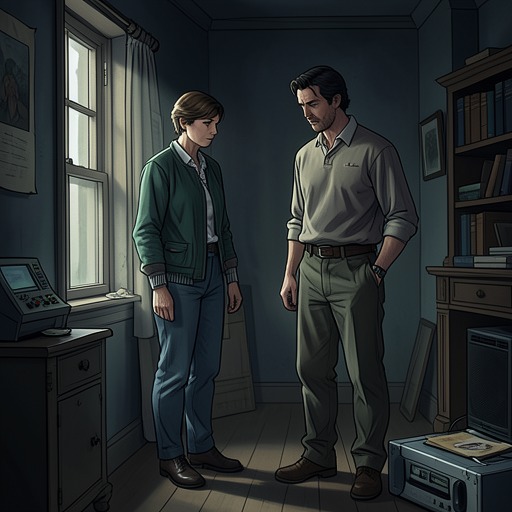
Happiness for BeginnersThe BCSC Trip Medical Clearance Requirement was a safety gate for joining the wilderness course, but Jake got around it by having a friend falsify his medical report. His undisclosed diagnosis of retinitis pigmentosa gave that breach exceptional weight: he entered a remote, hazardous expedition while knowing his sight would progressively fail. The rule’s importance lies both in the risk it was meant to address and in how the story contrasts medical screening with signed waivers and an individual’s determination to go anyway.
Purpose and Limits of the Requirement
The evidence establishes a clear basic condition: participants were expected to pass a medical. When Helen asks how Jake could be on the trip after failing, he explains that a friend in medical school faked his report so he could attend. The account does not specify the examination’s criteria, which conditions would disqualify an applicant, or how BCSC verified submitted reports. It does, however, make the practical purpose of the requirement legible: a participant’s medical fitness mattered enough that failing the assessment should have prevented participation.
That safeguard sat within a course widely associated with danger. Helen had signed about fifty waivers accepting BCSC’s lack of responsibility for possible life-threatening or fatal situations, including bear attacks, avalanches, hypothermia, and even “fatal diarrhea.” The waivers and the medical review addressed different aspects of risk: the first recorded participants’ acceptance of hazards; the second screened their medical suitability. Jake’s forged report did not erase the distinction. Instead, his case shows how formal acceptance of wilderness danger could coexist with a separate process intended to assess whether a person should undertake the trip at all.
The course’s reputation sharpened the stakes. Helen knew BCSC for steep slopes, rocky routes, and remote locations, and had encountered accounts of broken bones, rockslides, bear attacks, missing hikers, and hypothermia. In that setting, medical review was not an abstract administrative hurdle. Yet the evidence does not describe a particular injury caused by Jake’s deception or state that the screening system discovered the forgery. The documented outcome is that it failed to keep him off the expedition.
Jake’s Bypass
Jake’s participation followed a concealed reversal. He had signed up, canceled, and then signed up again. When Helen learns that he never passed the medical, he admits that a friend in medical school fabricated the report. Asked why he took that risk, he says that he wanted to come on the trip. He responds to Helen’s warning that the course is dangerous by comparing it with ordinary activities such as crossing a street, swimming, or eating a hamburger. His reasoning minimizes the distinction between familiar everyday risks and a demanding expedition in remote country.
The deception was more than a casual irregularity: it enabled Jake to attend after he had withdrawn because of trouble with his eyes. He later explains that examinations and tests had revealed an inherited disorder that could not be fixed. The condition was retinitis pigmentosa, which affected his night vision and threatened his sight over time. This information changes the meaning of his earlier decision. He did not merely bend a rule to satisfy a passing appetite for adventure; he knowingly entered the trip after a medical problem had already prompted him to cancel, and used a falsified report to reverse that decision.
The medical concealment also extended into Jake’s family life. His father did not know he was on the trip and believed he was attending a Buddhist meditation retreat in the Berkshires. Jake describes a parent who saw him as the high-achieving son he had always expected, calling him Doc and imagining a particular future for him. That secrecy helps explain the personal pressures around Jake’s choices, but it does not make the clearance requirement disappear: the false report was what allowed him to join the course despite his earlier withdrawal.
Diagnosis and the Stakes of Participation
Jake tells Helen that, over the next few years, he will lose his sight. He has spent the preceding year researching the condition and understands that there is nothing he can do to stop the loss of light. The revelation reframes his presence among fellow hikers who complain about blisters or feeling misunderstood: he has carried the knowledge of impending blindness while moving through the same wilderness as the group. The novel presents the diagnosis as a concrete, developing experience, not simply a reason to label Jake reckless. It affects what he knows about his body, what future he can imagine, and what he chooses to do while he still has sight.
That urgency appears in the things he wants to see and do. His list includes returning to his childhood home, seeing a merry-go-round from his grandmother’s visits, looking through his father’s historical family photographs in Texas, scuba diving, driving a race car, and riding the world’s scariest roller coaster. Later, he says that the prospect of losing his sight made the future he had imagined—including becoming a doctor, having children, and learning to scuba dive—seem to be disappearing. These desires help explain the force of his wish to join the expedition, while also exposing the danger in treating his urgency as a substitute for medical clearance.
Consequences and Significance
The evidence establishes the breach and Jake’s participation, not a specific disciplinary response from BCSC. No sanction for the forged report is described, and the account does not show that the course changed its procedures afterward. What follows instead is a personal disclosure: Helen learns why Jake canceled, why he returned, and what he had concealed. His admission that he should not have been there links the rule violation to his own recognition that desire did not make the risk vanish.
The requirement therefore functions as a boundary between choosing to accept wilderness hazards and concealing information that might bear on fitness to undertake them. BCSC’s waivers make the dangers explicit, but Jake’s case shows the limits of paperwork when a participant’s medical report is falsified. His decision allows the narrative to hold two truths together: he is determined to seize experiences before his sight deteriorates, and that determination has led him to evade a safeguard designed for a dangerous trip. The rule matters not because the text supplies a complete policy manual, but because its breach reveals the cost—and the uncertainty—of treating individual resolve as enough.